
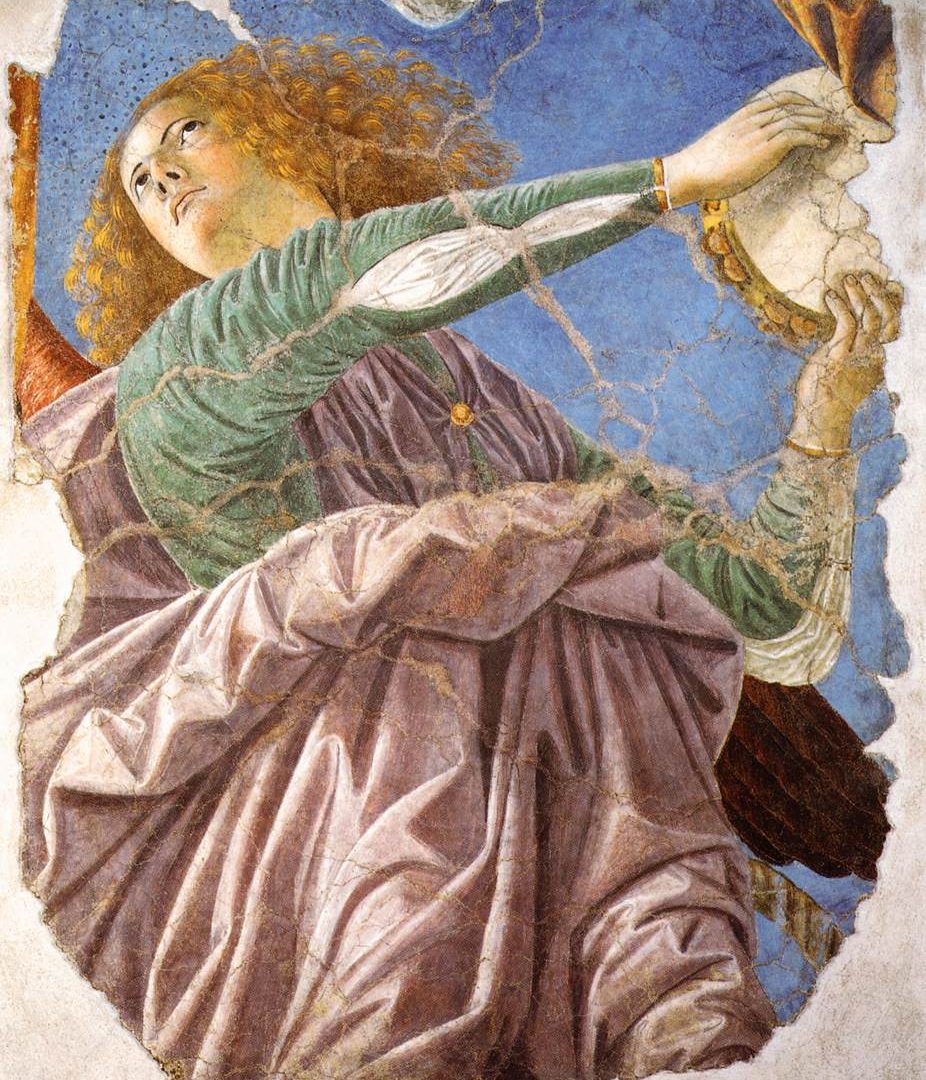
Of all the elements of music, rhythm is the most primal. It exists before melody, before harmony, before any notion of pitch. A single drum struck repeatedly is already music.
What is rhythm?
Rhythm is the organization of sound in time. It determines when notes happen, how long they last, how they are accented, and how they group together into patterns that we recognize and anticipate.
Rhythm has several interdependent components—none of them fully meaningful in isolation:
Pulse
The pulse—also called the beat—is the regular, underlying unit of time in music. It is what you tap your foot to. While individual sounds and accents change constantly, the pulse remains steady in the background, keeping the entire musical structure together.
Meter
Meter is the grouping of pulses into recurring patterns of strong and weak beats. By organizing time this way, meter gives music a sense of predictability.
In most Western music, pulses group into symmetrical patterns:
- Duple meter (2/4): strong-weak, strong-weak — a march
- Triple meter (3/4): strong-weak-weak, strong-weak-weak — a waltz
- Quadruple meter (4/4): strong-weak-medium-weak — the most common meter in Western music
The meter is indicated at the beginning of a score by the time signature—two numbers stacked vertically. The top number tells you how many beats are in each measure; the bottom tells you which note value counts as one beat.
These are the most common meters, but composers have always explored beyond them. Some works use asymmetrical meters—groupings of five, seven, or more beats—and others change meter constantly, measure by measure.
Listen to this rare and celebrated example of a symphony movement written in 5/4: Tchaikovsky’s Symphony No. 6 in B minor “Pathétique” (II. Allegro con grazia), conducted by Herbert von Karajan with the Vienna Philharmonic.
You can hear the exact same asymmetrical 5/4 meter in a completely different context, where it gives the piece a distinctive, hypnotic quality: Andrew Lloyd Webber’s “Everything’s Alright” from Jesus Christ Superstar (1996 London Cast).
For a more radical approach to meter, listen to Igor Stravinsky’s Les Noces (Second tableau). Here, the time signature changes almost every measure, following the natural accents of the Russian text rather than any regular pattern. Stravinsky himself conducts this historic recording, and the four pianos required for the piece are played by legendary composers Aaron Copland, Samuel Barber, Lukas Foss, and Roger Sessions.
Duration
Duration refers to how long each individual sound lasts. The precise organization of long and short sounds within the pulse is what creates rhythmic patterns and gives music its character. In Western notation, duration is represented by different note values (such as whole notes, half notes, quarter notes, or eighth notes).
Tempo
Tempo is the speed of the pulse—how fast or slow the underlying beat moves. In Western music, tempo is traditionally indicated with Italian terms:
- Largo — very slow
- Adagio — slow
- Andante — walking pace
- Allegro — fast
- Presto — very fast
Tempo can also be indicated with a metronome marking (♩= 120), which specifies the exact number of beats per minute.
The Interdependence of Rhythm’s Elements
None of these components—pulse, meter, duration, or tempo—exist in a vacuum. They are deeply interdependent, and changing just one of them completely transforms the character of the music.
To observe this synergy, we can look at how the exact same metric framework can feel entirely different depending on its tempo.
Listen to “El paño moruno” from Manuel de Falla’s Siete canciones populares españolas (performed by mezzo-soprano Teresa Berganza). It is written in 3/8 with a very fast tempo. The meter groups beats in threes, but at this speed they fly by, creating urgency and energy.
By contrast, listen to the aria “Piangerò la sorte mia” from George Frideric Handel’s Giulio Cesare in Egitto (Barbara Schlick, soprano / René Jacobs, Conductor / Concerto Köln). It is also written in 3/8, but with an extremely slow tempo. The same metric structure is stretched to the point where each beat becomes a moment of suspended emotion.
This post is part of Koilon’s Music Appreciation series — an introduction to music for curious listeners of all backgrounds.