
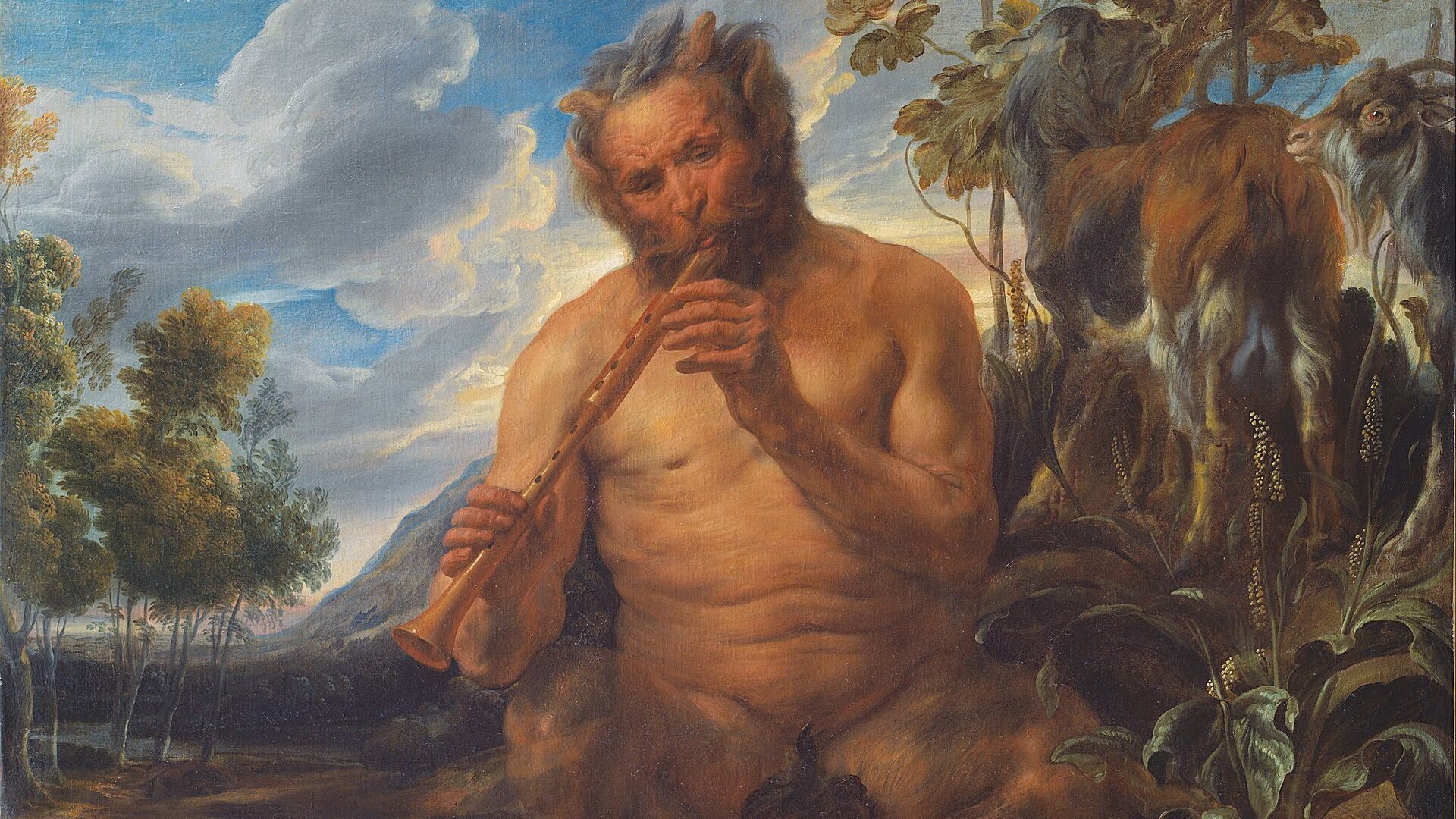
Of all the elements of music, melody is the most immediately recognizable. It is the element we carry with us—the line we hum on the way home, the fragment that surfaces unexpectedly days after a concert. Melody is music made memorable.
What is melody?
Melody is a succession of notes of varying pitch and duration. It is the horizontal dimension of music—what unfolds in time, note after note. Any music that has more than one pitch has a melodic dimension, whether it consists of a short, repeated motif or an aria that lasts twenty minutes.
What makes a melody work?
Defining melody is easy. Understanding what makes one melody memorable and another forgettable is considerably harder—and ultimately, no set of rules can fully explain it.
That said, certain principles tend to appear in melodies that satisfy us. A melody that feels complete usually has a sense of proportion—a balance between tension and rest, between motion and arrival. It tends to have a high point, a moment of greatest intensity, and that moment usually comes near the end rather than the beginning. It also has a rhythmic life of its own: not just a sequence of pitches, but a sequence of tones that moves with a sense of inevitability.
Beneath any well-constructed melody, there is also what might be called a skeletal frame—the essential notes that carry the line forward, around which the other notes move and ornament. A trained musician can identify this skeleton analytically; an attentive listener will sense it instinctively. When that backbone is absent, the melody feels shapeless, even if it is technically correct.
Melodies, like sentences, have punctuation. Phrases arrive at temporary resting points—moments of greater or lesser finality, equivalent to commas, semicolons, and periods in writing. These points of rest, called cadences, divide the melodic line into units that the ear can follow and remember. Without them, even a beautiful melody becomes exhausting.
The architectural design of a melody often follows distinct paths, balancing between smooth, stepwise motion and wide, dramatic leaps.
In Renaissance polyphony, for instance, voices typically move without any sudden or large intervals, creating a balanced texture where each tone leads naturally to the next. A perfect demonstration of this seamless, horizontal flow can be found in Giovanni Pierluigi da Palestrina’s four-voice motet:
- G.P. da Palestrina: Sicut cervus. Massimo Palombella, Conductor / Sistine Chapel Choir.
By contrast, some melodies derive their expressive power from a deliberately jagged approach. Mozart famously weaponized this technique in Così fan tutte: legend has it he so disliked the premiering soprano, Adriana Ferrarese del Bene, and her habit of eccentric head-bobbing, that he purposefully filled her aria with extreme, wide intervals. Written to exploit and mock her vocal range, the resulting melodic line creates immense emotional tension, defiance, and a notorious technical difficulty:
- W.A. Mozart: Così fan tutte, K. 588 – Act I, No. 14 Aria: “Come scoglio”. Elisabeth Schwarzkopf, soprano / Karl Böhm, Conductor / Philharmonia Orchestra.
Phrase
Melodies are organized into phrases—the musical units between cadences. A phrase breathes, arrives at a point of temporary rest, and then continues or answers with another phrase. The relationship between these phrases—whether they rhyme, contrast, or develop—is one of the fundamental ways composers give a melody its shape and meaning.
Contour
The overall shape of a melody—its rise and fall across its entire span—is called its contour. Some melodies climb steadily toward a high point and then descend. Others oscillate, move in waves, or remain within a narrow, static range.
Contour is one of the first things we perceive in a melody, often before we have consciously registered any individual note. We can observe this structural geometry through two pieces that sit at opposite emotional and formal extremes.
In his fifth symphony, Beethoven stripped a melodic line to its absolute core and generated an entire movement from a tiny, four-note structural motif—three of them on the exact same pitch. Its jagged, concentrated contour contains the rhythmic and melodic seed of the entire work:
- L. van Beethoven: Symphony No. 5 in C minor, Op. 67 – I. Allegro con brio. Wilhelm Furtwängler, Conductor / Vienna Philharmonic.
That extreme concentration stands in sharp contrast with the Italian Verismo style, where melodies often seem to have no boundaries. In this orchestral intermezzo, the music unfolds in long, arching, and expansive lines that breathe without any sense of urgency, releasing the dramatic tension through an extraordinarily wide and lyrical contour:
- P. Mascagni: Cavalleria rusticana – Intermezzo. Renato Cellini, Conductor / RCA Victor Orchestra.
This post is part of Koilon’s Music Appreciation series — an introduction to music for curious listeners of all backgrounds.